
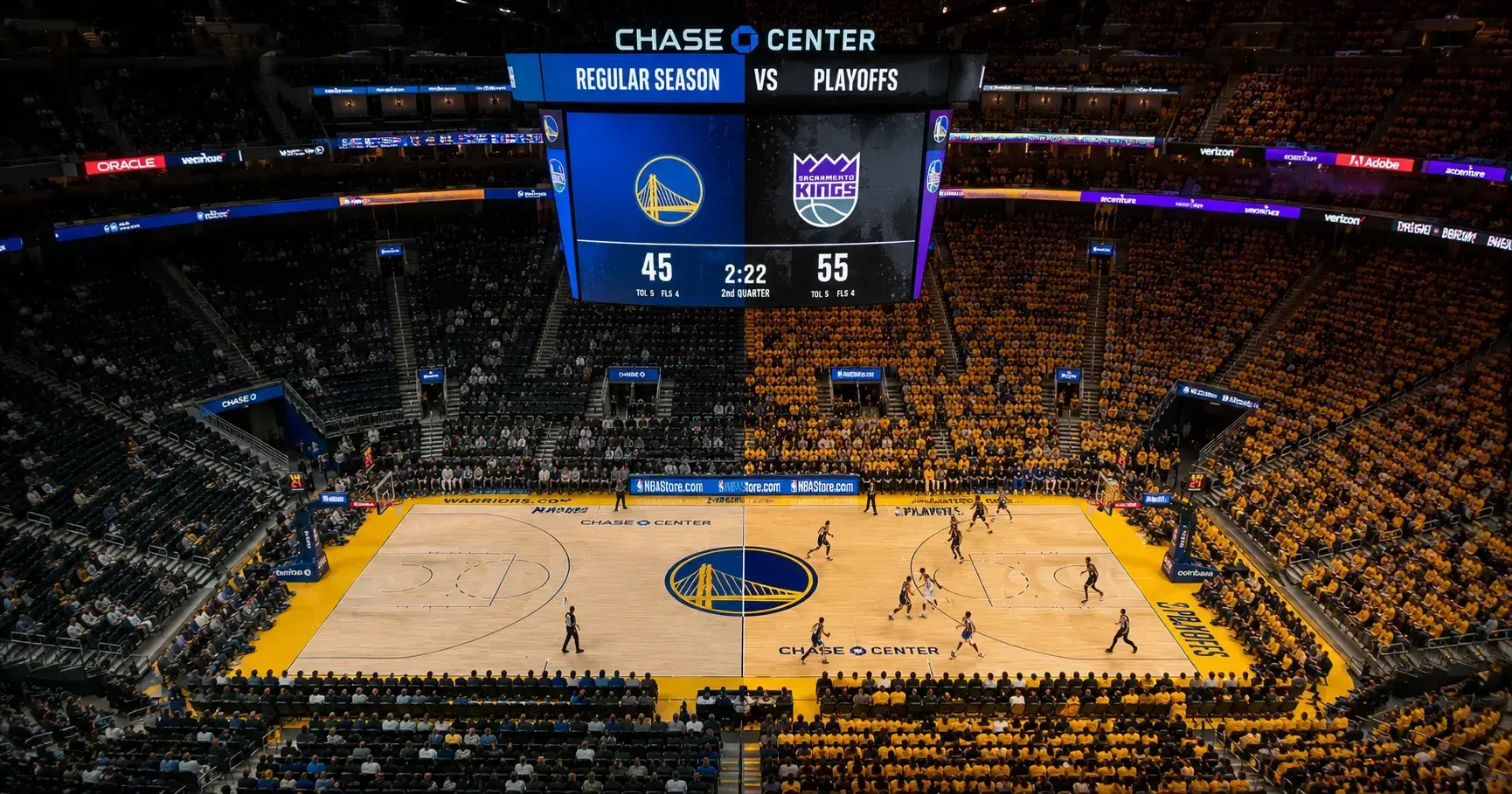
The first playoff series I bet after a profitable regular season taught me a painful lesson: the strategy that worked for 82 games stopped working almost overnight. My regular-season approach relied on identifying , exploiting early-season public overreaction and targeting teams with unsustainable shooting variance. All three of those angles disappeared the moment the playoffs began. There are no back-to-backs in the postseason. The casual public bettors who overreacted in October have been filtered out by April. And shooting variance normalises across a seven-game series because the sample size per matchup grows large enough for talent to assert itself over luck.
The NBA regular season and the playoffs are fundamentally different betting environments, and the punter who treats them identically is leaving money on the table in one phase and actively losing it in the other. This guide breaks down the specific market differences between the two phases, explains how to adjust your bankroll and unit sizing as the season progresses, and provides a practical checklist for transitioning your approach when the postseason arrives.
Market Shifts Between the Regular Season and Playoffs
The regular season is an 82-game marathon that generates enormous betting volume across thousands of individual games. The global sports betting market now generates approximately $88 billion in revenue, and NBA regular-season action accounts for a meaningful share of that across the seven-month window from October to April. The sheer volume means that regular-season lines, while generally efficient, contain more exploitable inefficiencies than playoff lines because bookmakers are setting prices on 15 games per night with less time and fewer resources per matchup.
Playoff markets are sharper for three reasons. First, the number of games drops dramatically — from 15 per night to two or four — which allows bookmakers and sharp bettors to concentrate their analysis on fewer matchups. Second, the games themselves are more predictable because the best teams have been filtered through a full season, reducing the talent gap between opponents. Third, the series format means both teams and bookmakers can adjust between games, eliminating many of the informational asymmetries that create regular-season edges.
Spreads tighten in the playoffs. Regular-season spreads routinely reach double digits when a top team hosts a bottom-five opponent, but playoff spreads rarely exceed seven points because the quality gap between participants is narrower. This compression means that the value of getting an extra half-point on a spread — buying -6 instead of -6.5, for example — is amplified in the postseason. In the regular season, the difference between -10 and -10.5 matters less because blowouts are common. In the playoffs, every half-point is critical because games are decided by smaller margins.
Totals also behave differently. Regular-season totals average around 225-230, but playoff totals often drop to 215-220 because defensive intensity increases and pace slows. Teams in the postseason run more half-court sets, play tighter rotations with fewer minutes for bench players and contest shots more aggressively. If your totals strategy is calibrated to regular-season pace data, it will systematically overestimate playoff scoring and push you toward the over at a time when the under is historically the better lean.
Adjusting Bankroll, Unit Size and Market Selection by Phase
My bankroll framework shifts at three points during the NBA calendar: pre-season to regular season, regular season to playoffs and conference finals to Finals. Each transition triggers specific adjustments to unit size, bet frequency and market focus.
During the regular season, I target five to eight bets per week across the full slate of games. My unit size is fixed at 1.5% of my bankroll, and I spread my action across spreads, totals and selected player props. The volume of games creates enough opportunities to be selective — I pass on games where I do not have a clear edge and focus on the matchups where my analysis identifies a pricing discrepancy. The key discipline in the regular season is not overbetting: with 15 games per night, the temptation is to find action on every slate, but selectivity is the foundation of long-term profitability.
When the playoffs begin, I reduce my bet frequency to two to four bets per week but increase my unit size to 2% of bankroll. The reasoning is straightforward: there are fewer games, but the ones that exist are better-analysed and my confidence in each individual play is higher. I also shift my market focus toward series bets, which are unavailable during the regular season and offer a lower-variance way to express a view on a matchup that will play out over multiple games. Player props become more volatile in the playoffs because rotations shorten and minute distributions become less predictable, so I reduce my prop betting volume by about half.
A survey by Yogonet found that 68% of UK gamblers expect to increase their betting activity in 2026, driven in part by major sporting events. That enthusiasm is natural, but the punter who increases activity during the NBA playoffs without also increasing selectivity is heading for trouble. More action on fewer, sharper-priced games is a recipe for losses. The adjustment should be: bet with more conviction on fewer opportunities, not more frequently on a shrinking slate.
Checklist for Switching from Regular Season to Playoff Betting
I run through this checklist every April before placing my first playoff bet. It takes about 30 minutes and has saved me from repeating the same phase-transition mistakes that cost me money early in my betting career.
Step one: recalibrate your pace and totals assumptions. Pull the last 10 games for each playoff team and calculate their average pace, offensive rating and defensive rating. Compare these to their full-season numbers. If the end-of-season pace is slower than the full-season average — common for teams resting players or coasting — adjust your totals projections downward by one to two points. If the end-of-season pace is faster — common for teams fighting for seeding — be cautious about carrying that inflated number into the playoffs.
Step two: review the head-to-head matchup data from the regular season. How many times did these teams play? What were the margins? Which players were available in each meeting? Head-to-head data is more predictive in a seven-game series than overall record because it reflects the specific tactical matchup rather than aggregate performance against varied opponents.
Step three: assess coaching adjustments. Some coaches are known for effective between-game adjustments in the playoffs — changing defensive schemes, altering rotations, introducing new plays. Others rely on the same approach regardless of series context. Coaching adjustment quality is a meaningful edge in series betting because it compounds across multiple games in a way that has no parallel in the regular season.
Step four: reassess your bankroll position. If the regular season depleted your bankroll, reduce your playoff unit size proportionally. If the regular season grew your bankroll, resist the temptation to increase your unit size beyond 2%. The playoffs are not a time to chase regular-season losses or press regular-season gains.
The UK government has stated that increasing gambling duties will raise over £1 billion per year, reflecting the scale of the UK betting market and the regulatory attention it receives. That regulatory context reinforces the importance of discipline: the market is designed to extract money from undisciplined bettors, and the phase transition from regular season to playoffs is one of the moments when discipline is most likely to slip. Stick to the checklist, adjust your approach to match the new environment, and trust that the analytical framework you built during the regular season will serve you in the postseason — provided you adapt it to the different conditions.